Loading
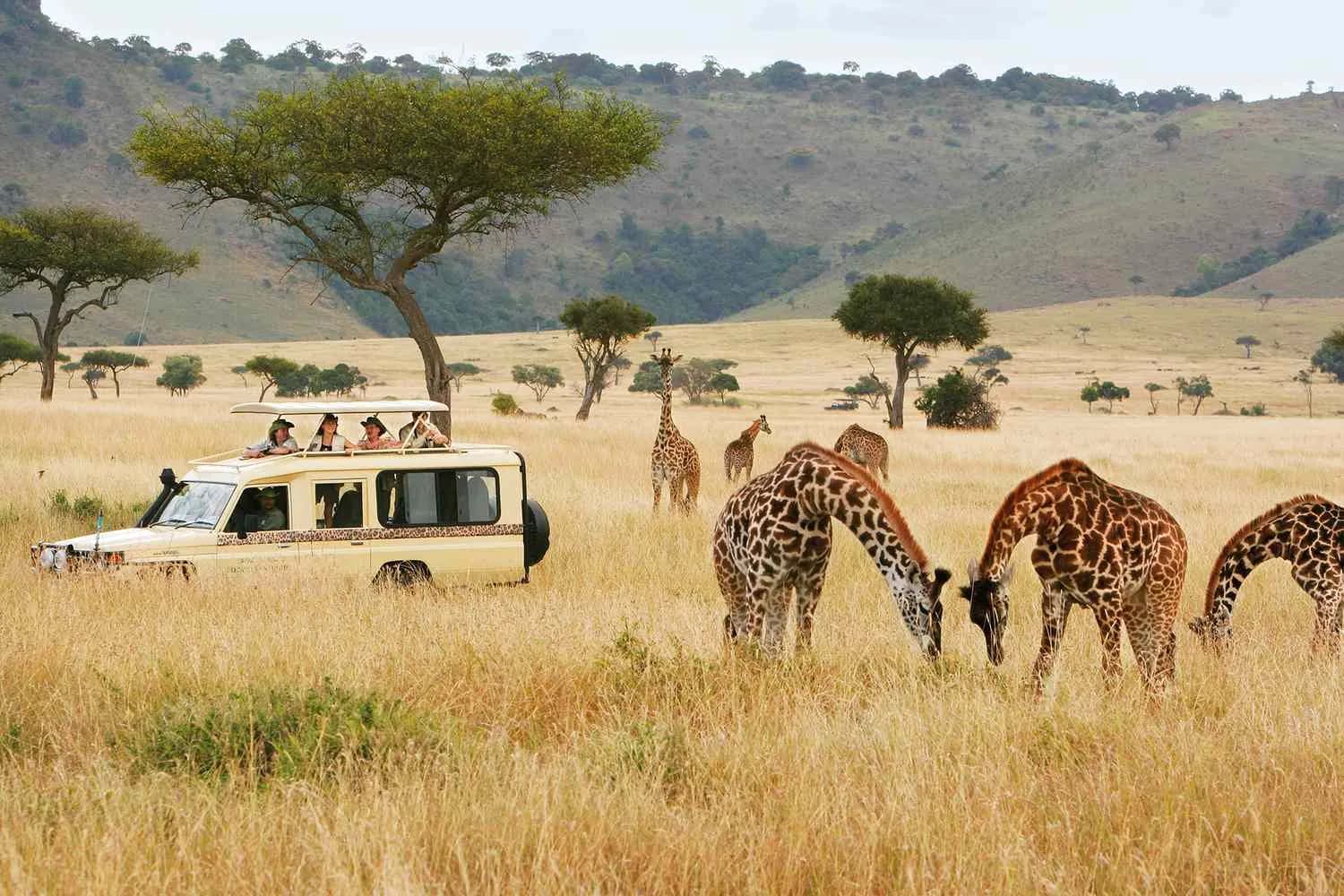
Planning and costRwanda + Uganda + Kenya + Tanzania
Planning a first safari in East Africa
How do I plan a first safari?
The short answer
Make one decision first: gorillas, the migration, or both. That single choice sets your country, your season and most of your budget, and everything else follows from it. Then fix dates, hold permits, choose the route, and book international flights last. Our journeys run three to sixteen days and start between USD 2,180 and USD 11,600 per person sharing, which is the range a first trip is choosing inside.
The numbers
- Journey lengths
- 3 to 16 days
- Lead-in prices
- USD 2,180 to 11,600
- Shortest gorilla trip
- 3 days, Kigali round trip
- Book first
- Permits, then lodges
Last checked 17 October 2026. Permit prices are set by the national park authorities and are revised periodically.
Want this answered for your dates rather than in general?
Start with one decision, not a wishlist
Almost every first safari we plan is really an answer to one question: gorillas, the migration, or both. That choice decides the country, and the country decides the season, the airport, the road time and most of the cost. Trying to decide the lodge standard or the camp location before that is settled is how people end up with a route that fights itself.
Gorillas means Rwanda or Uganda, a permit at USD 1,500 or USD 800, and a trip that can be as short as three days. The migration means Kenya or Tanzania and a season, July to October for the river crossings or February for the calving at Ndutu. Both means eleven days as a minimum and more sensibly sixteen.
How many days you actually need
The three day trip is real, not a compromise. Our Virunga Gorilla Express lands in Kigali, drives two hours to a lodge near Kinigi, treks the next morning and is back at the airport on day three, from USD 2,180. It works because Rwanda put its gorilla park two hours from an international airport.
Beyond that, the useful bands are six to eight days for one country done properly, ten to twelve for a country plus the coast, and sixteen if you are crossing borders. A seven day trip that visits four parks is a driving holiday with animals at the edges.
- Three days: one gorilla trek, Rwanda, Kigali round trip
- Six to eight days: one country, two or three parks, no rushing
- Ten to twelve days: one country plus Zanzibar, or primates plus savannah
- Eleven to sixteen days: two to four countries, with regional flights
Pick the season before you pick the lodge
Each country has a different best window, and they do not line up. If your dates are fixed, read along your month instead of down the column, and let that choose the country.
| Country | Best | Strong | Green season |
|---|---|---|---|
| Rwanda | Jun to Sep, the long dry season | Dec to Feb, thinner crowds | Mar to May, hard underfoot, lowest rates |
| Uganda | Jun to Aug, and it books out early | Dec to Feb, excellent in the forests | Mar to May, heaviest rain, birding peaks |
| Kenya | Jul to Oct, migration in the Mara | Jan to Feb, hot, dry, superb cats | Mar to May, some camps close |
| Tanzania | Jun to Oct, dry and the river crossings | Jan to Mar, calving in the south | Apr to May, rates fall hard |
Permits set your dates, not the lodges
If a gorilla trek is in the trip, the permit is the scarce thing and everything else bends around it. Eight trekkers per family per day is a hard cap, and Volcanoes National Park has twelve habituated families, which puts the whole park under a hundred permits a day in a peak season that runs June to September.
We hold permits before invoicing the rest of the trip, and in Bwindi we book the lodge against the sector the permit is for, because the four sectors are hours apart by road.
Road time is what first-timers get wrong
Distances on an East African map do not translate into hours the way they would at home. These are real figures from our own itineraries, and they are worth reading before you decide a route looks easy.
- Kigali to the gorilla trailhead at Kinigi: about 2 hours by road
- Nairobi to the Maasai Mara: 5.5 to 6 hours by road, or 45 minutes by air from Wilson
- Nairobi to Amboseli: about 4.5 hours
- Entebbe to Lake Mburo: about 4.5 hours, and the return leg from Bwindi is an 8 to 9 hour day
- Kihihi to Entebbe by scheduled flight: about 90 minutes, replacing that drive
- Ngorongoro rim to the central Serengeti: about 4 hours, via Olduvai Gorge
- Serengeti to Arusha by scheduled flight: about 2 hours, which is why we fly out rather than drive back
What a quoted price includes, and what it does not
Our journey prices are lead-in figures per person sharing a twin or double room, confirmed on enquiry. The pattern of what sits inside them is consistent across every journey, and so is the pattern of what does not.
- Included: permits and park fees, a private 4x4 with a pop-top roof and a driver-guide, accommodation, full board in the parks and breakfast at city hotels, bottled water in the vehicle, and airport transfers
- Not included: international flights, visas and any electronic travel authority fees, travel insurance, tips, drinks other than bottled water, porter hire at the trailhead, and optional extras such as a balloon flight or a second gorilla permit
Insurance is the one line not to skip
Travel insurance including medical evacuation cover is excluded from every journey price on this site, which means it is a decision you have to make yourself rather than one that happens by default. You are going to spend time hours from a hospital, on foot, on volcanic slopes and in open vehicles. Buy the cover.
The order we would book in
- Decide gorillas, migration, or both
- Fix the dates, against the season table above
- Hold the permits, with the Bwindi sector named if it is Uganda
- Agree the route and the number of nights per park
- Book lodges and camps against the sectors and the herd forecast
- Buy travel insurance with medical evacuation cover
- Book international flights last, once the trek date is confirmed
Questions
- How long should a first safari be?
- Three days is enough for one gorilla trek in Rwanda. For a country done properly, six to eight days. Add the coast or a second country and it becomes ten to sixteen. A seven day trip across four parks spends most of itself on the road.
- How far ahead should I book?
- Fix dates and hold permits as early as you can, especially for June to September in Rwanda, June to August in Uganda, or August with the migration herds, when the best crossing camps fill first. Book international flights last, once the trek date is confirmed.
- What is a realistic budget for a first safari?
- Our journeys start between USD 2,180 for three days in Rwanda and USD 11,600 for sixteen days across four countries, per person sharing. International flights, visas, insurance and tips sit on top of those figures.
- What is not included in a safari price?
- International flights, visas and electronic travel authority fees, travel insurance including medical evacuation, tips, drinks other than bottled water, porter hire at the trailhead, and optional extras such as a balloon flight or a second gorilla permit.
- Do I need internal flights?
- Not always, and in Rwanda not at all, since the parks are four hours apart at most. They earn their cost where a drive is a full day: Kihihi to Entebbe is about 90 minutes in the air against an 8 to 9 hour road day, and we fly out of the Serengeti rather than drive back to Arusha.
- Which country is best for a first safari?
- Rwanda if gorillas are the point and time is short. Kenya if big cats and the migration are, since it is compact and starts at USD 3,640 for seven days. Tanzania if you want the migration, the Ngorongoro Crater and the coast on one trip and have ten days or more.
Where this applies
What we run
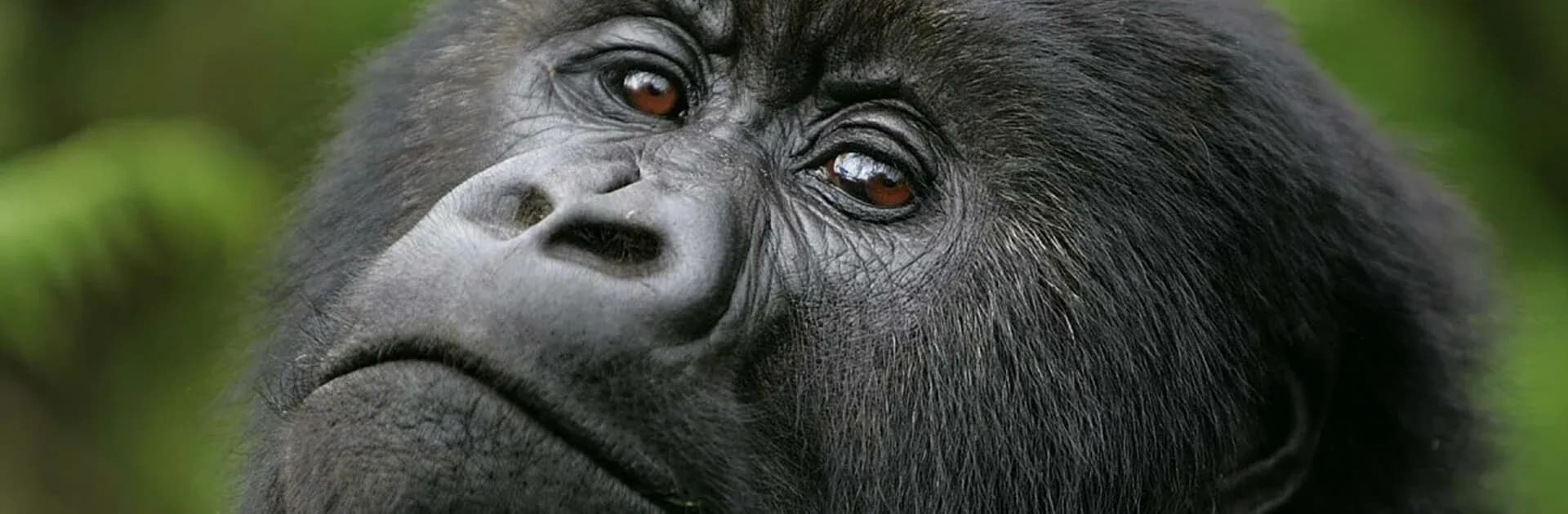
Gorilla trekking
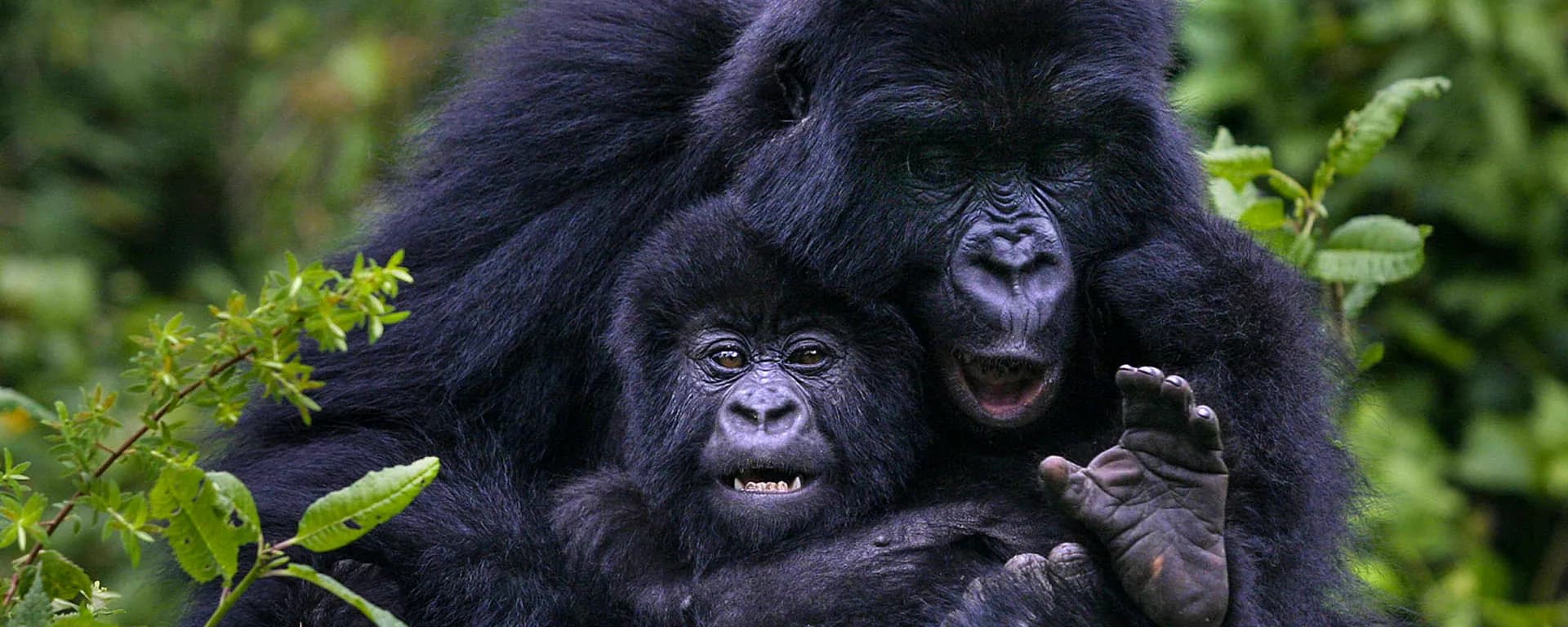
One hour with a habituated mountain gorilla family, in Rwanda's Virungas or Uganda's Bwindi.
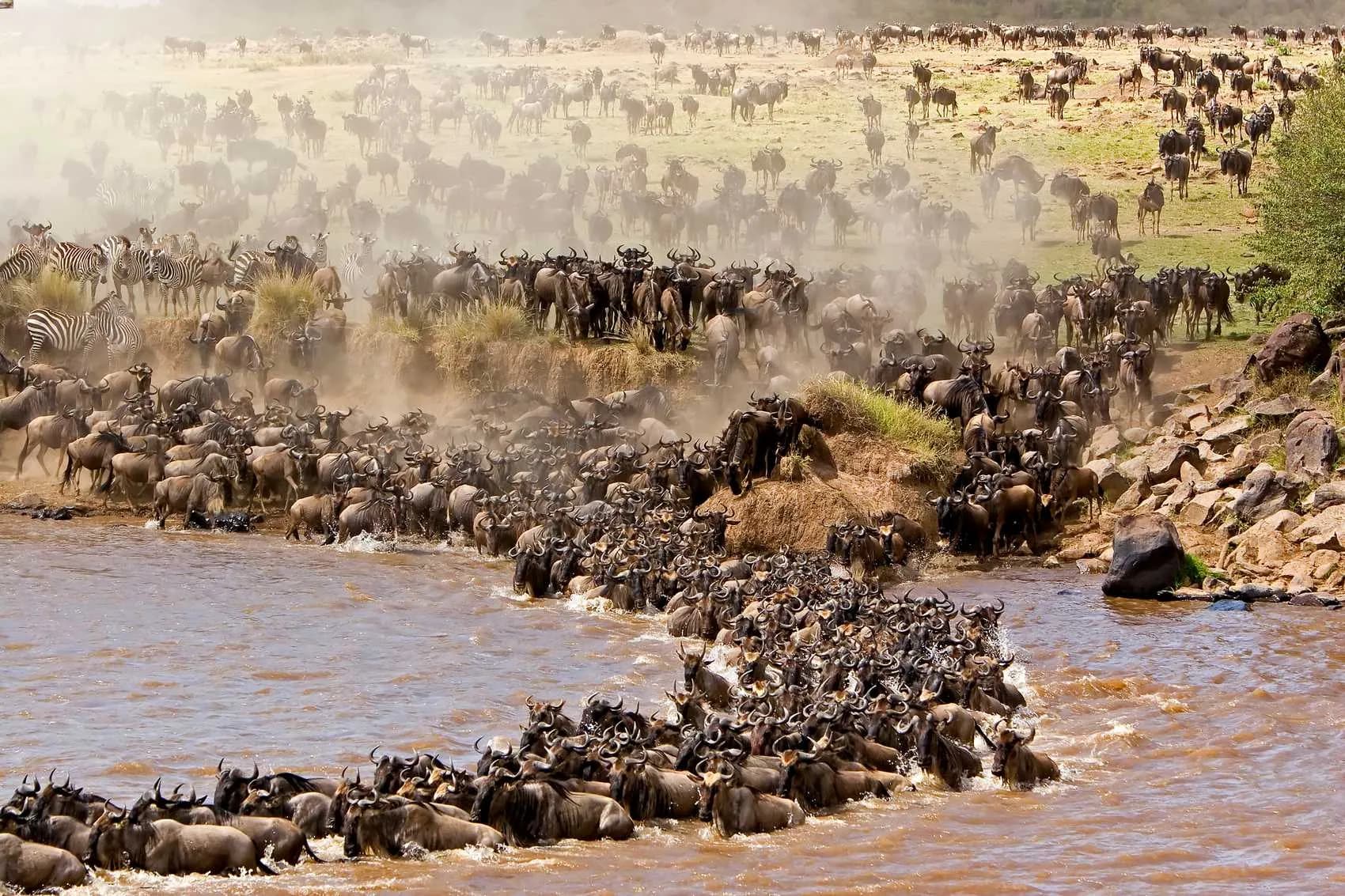
The Great Migration
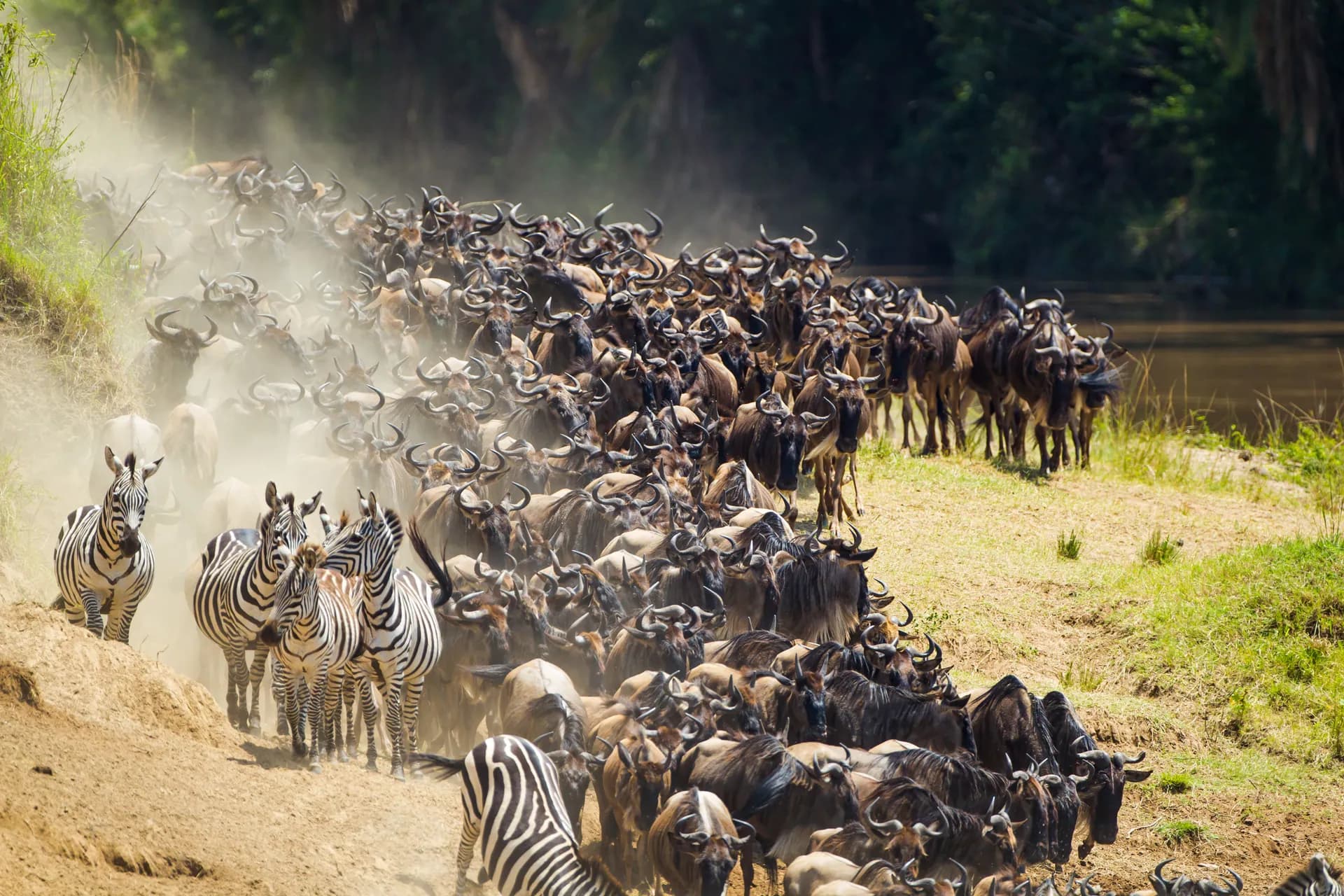
About 1.5 million wildebeest circle the Serengeti and Mara on a loop set by the rains.
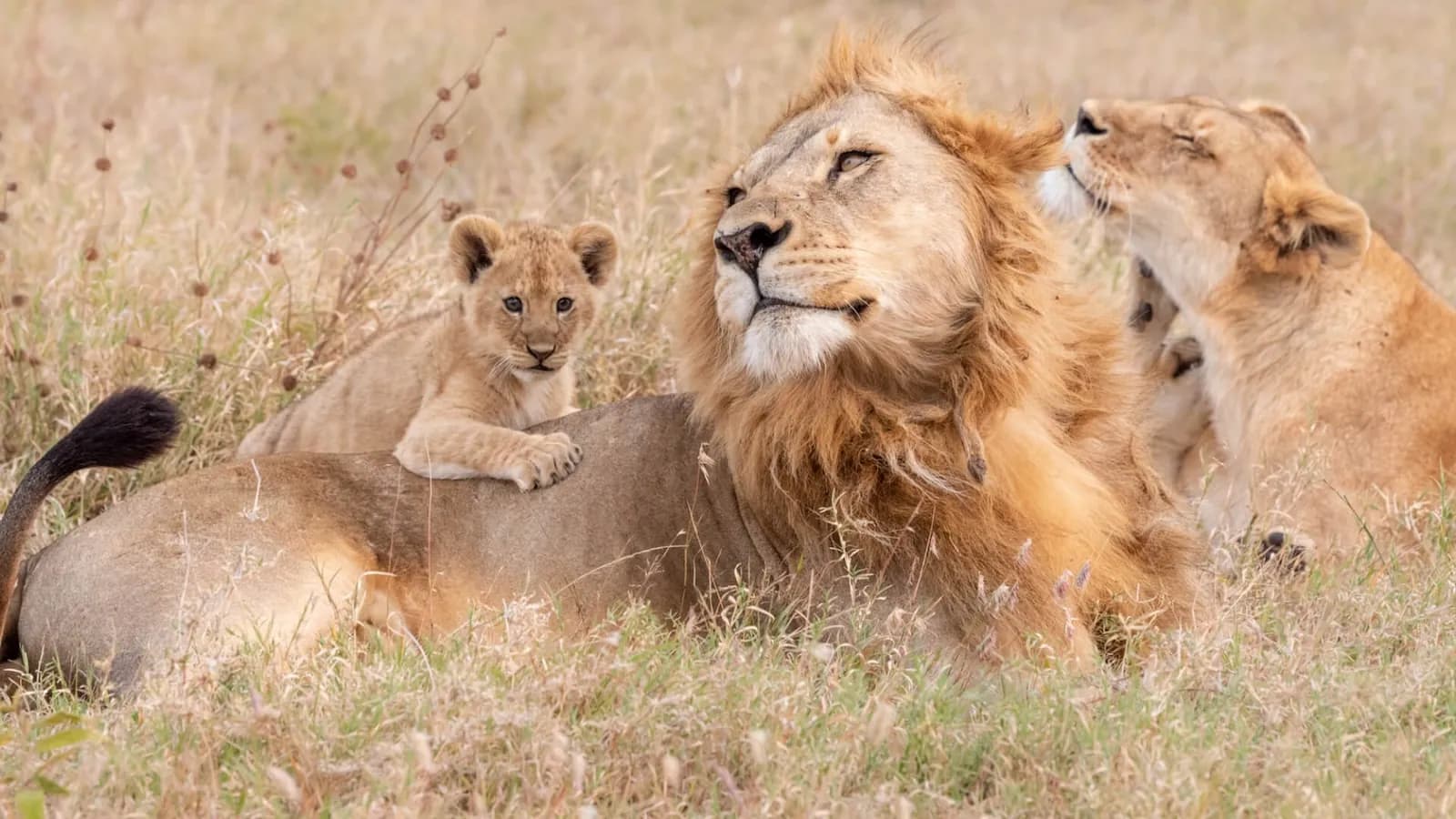
Big Five safari
Lion, leopard, elephant, buffalo and rhino, found in Akagera, the Mara, the Serengeti and Ngorongoro.
Read next
- What an East African safari costsHow much does a safari cost?
- When to see the Great MigrationWhat is the best time to see the Great Migration?
- Rwanda or Uganda for gorilla trekkingWhich country should I trek gorillas in?
Ask us the part this did not answer.
A planner in Kigali reads it, not a form.