Loading
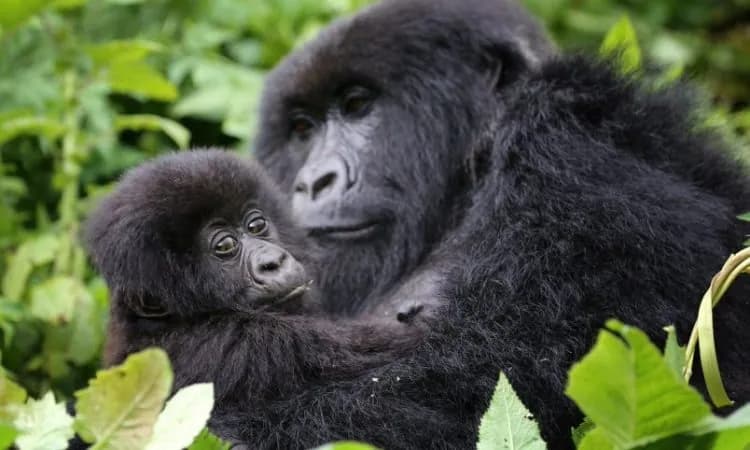
Gorilla trekkingRwanda + Uganda
How hard is gorilla trekking
How fit do I need to be to trek gorillas?
The short answer
Moderate to hard. In Rwanda the walk runs one to five hours each way, and in the Rushaga sector of Bwindi one to six hours on steep slopes, mostly without a path, often on wet ground. If you can walk three hours up and down a steep muddy hill and still be steady on the descent, you will be fine. The descent, not the climb, is the part people underestimate.
The numbers
- Fitness
- Moderate to hard
- Rwanda walk
- 1 to 5 hours
- Rushaga walk
- 1 to 6 hours, steep
- Group size
- 8 trekkers
Last checked 17 October 2026. Permit prices are set by the national park authorities and are revised periodically.
Want this answered for your dates rather than in general?
Why nobody can tell you the distance
A gorilla trek has no fixed route. Trackers set out at first light to the nests the family built the night before, follow the trail from there, and radio back a position. Your group then walks to wherever that is.
That is why every honest answer is a range. In Volcanoes National Park it is one to five hours. At Rushaga in southern Bwindi it is one to six, and on steeper ground. You find out which kind of day you are having at the briefing, at 7:00 in Kinigi and 7:30 at Rushaga, and not before.
What the ground is actually like
For most of the walk there is no path. You are moving through dense wet vegetation on a volcanic slope, stepping over roots and into holes you cannot see, in a forest that can rain in any month. Progress is slow and the pace is set by the group, which is capped at eight trekkers.
The climb is hard work but predictable. The descent is where people struggle, because wet ground on a steep slope asks a lot of knees and ankles at the end of a long morning. This is the single best argument for boots with ankle support and for taking a walking pole if you normally use one.
What you can control
More than people assume. Four decisions change the difficulty of the day, and three of them happen before you leave home.
- Country. Rwanda averages the shorter walk, at one to five hours against one to six on the Rushaga slopes
- Sector, in Bwindi. There are four, they are hours apart by road, and the sector on your permit decides the terrain. We book the lodge against the sector for this reason
- What you tell the rangers. Families are assigned at the briefing, and the rangers weigh what trekkers say they can manage. Be accurate rather than brave
- A porter. Hired at the trailhead, not included in the price, and the difference between carrying your own pack up a volcano and not
Training for it, if you want to
Nothing technical, and no gym required. Walk hills, with a pack on, in the boots you are going to wear. Go downhill as often as you go up, because that is the part the trek will test. If you can do three hours of that without your legs going, the trek is a hard morning rather than a bad day.
The days either side
The night before matters. Our itineraries sleep close to the trailhead on purpose: two hours from Kigali puts you at a lodge near Kinigi, where your guide checks boots, rain gear and fitness before an early dinner. An early night close to the park beats a longer night further away.
The day after is worth protecting. Our six day Uganda route follows the Rushaga trek with 2.5 hours to Lake Bunyonyi and an afternoon in a dugout canoe among the islands, which is there to let legs recover. If you are building your own route, put something flat after the trek rather than a long drive or a second early start.
If you are not sure you can do it
Tell us before we book rather than after. The sector, the family and the lodge are all decisions we can make differently if we know, and they are expensive to change once a permit is issued for a named date.
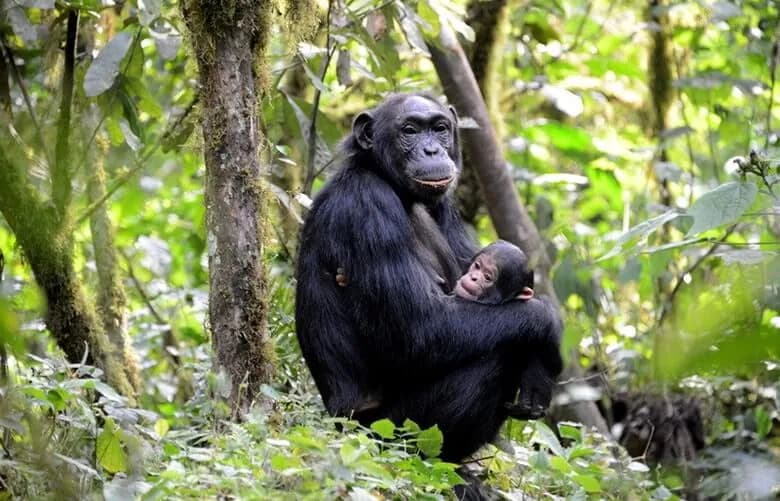
Chimpanzee tracking is the easier primate day, rated easy to moderate, and Kibale has the strongest sighting record in Africa. Nyungwe is quieter and steeper than Kibale, and it comes with a canopy walkway sixty metres above the forest floor, which is a different kind of morning altogether.
Questions
- How long is a gorilla trek?
- One to five hours each way in Volcanoes National Park in Rwanda, and one to six hours on steeper ground at Rushaga in Bwindi. The length depends on where the family nested the night before, which is why it is a range rather than a figure.
- How fit do I need to be?
- Moderate to hard fitness. If you can walk for three hours on a steep muddy hill, including the way down, and still be steady on your feet, you are fit enough.
- Is Bwindi harder than Volcanoes National Park?
- Usually, yes. Rushaga treks run one to six hours on steep slopes against one to five hours in Rwanda. Bwindi has four trekking sectors and the one on your permit changes the terrain, so the sector matters as much as the country.
- Can I ask for an easier gorilla family?
- You can tell the rangers at the briefing what you are able to manage, and they weigh that when they assign families. Be accurate about it. Nobody benefits from a trekker who cannot finish the walk.
- What is the hardest part of the trek?
- Coming down. Wet ground on a steep volcanic slope at the end of a long morning is harder on knees and ankles than the climb was, and it is why boots with ankle support are not optional.
- Is there an easier alternative to gorilla trekking?
- Chimpanzee tracking, rated easy to moderate. Kibale in Uganda has the strongest sighting record in Africa, and Nyungwe in Rwanda pairs chimpanzees with a canopy walkway sixty metres above the forest.
Where this applies
Read next
- What to pack for a gorilla trekWhat do I need to take gorilla trekking?
- Rwanda or Uganda for gorilla trekkingWhich country should I trek gorillas in?
- Gorilla trekking permits, what they cost and how booking worksHow much is a gorilla permit, and how do you get one?
Ask us the part this did not answer.
A planner in Kigali reads it, not a form.