Loading
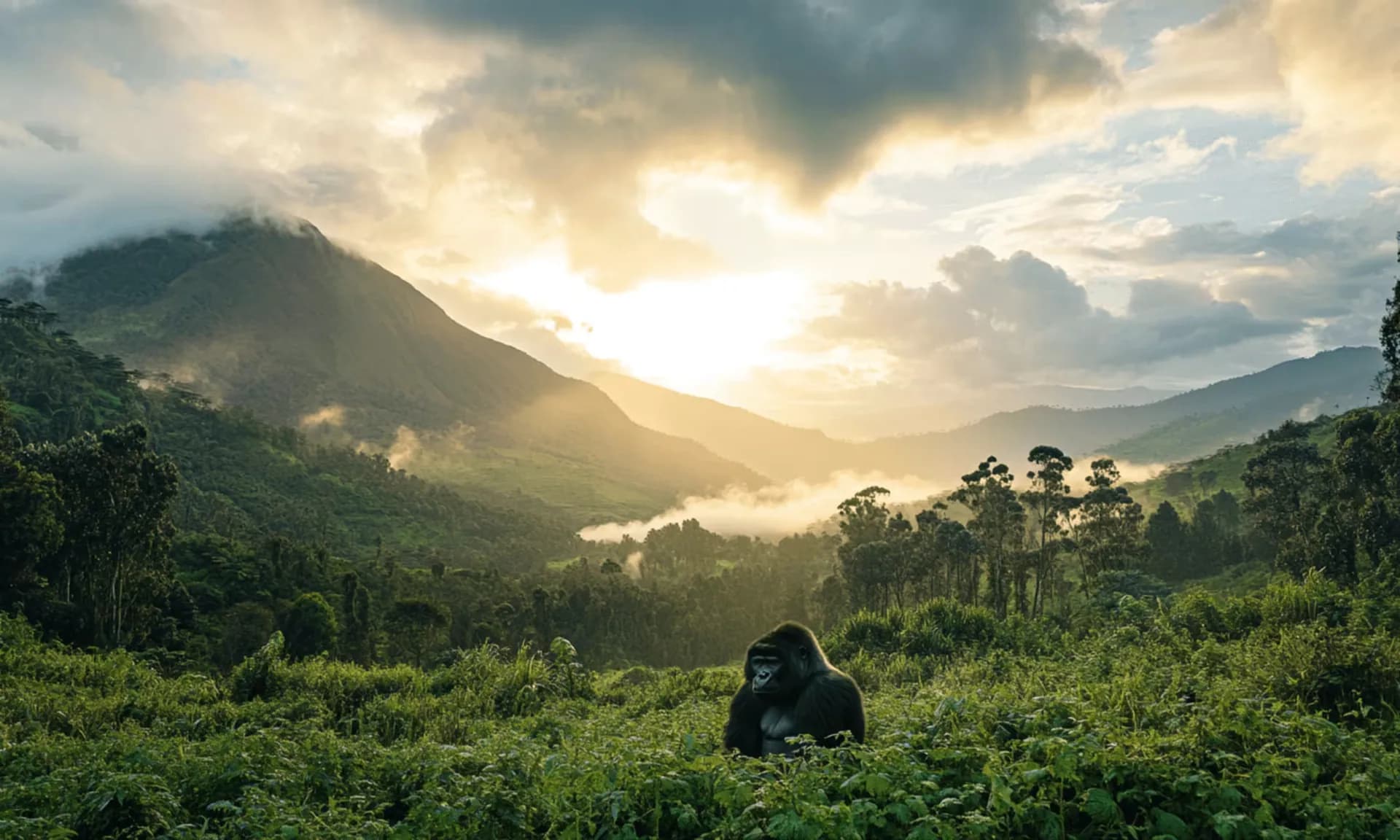
Gorilla trekkingRwanda + Uganda
What to pack for a gorilla trek
What do I need to take gorilla trekking?
The short answer
Broken-in waterproof boots, a rain jacket, long trousers and long sleeves, gloves, and a small day pack with water, a snack and something waterproof to wrap a camera in. The trek is one to five hours in Rwanda and one to six on the steeper Bwindi slopes, through wet vegetation on steep ground, in a forest that can rain in any month. Everything else on the list below is comfort. Those five things decide your morning.
The numbers
- Briefing
- 7:00 Kinigi, 7:30 Rushaga
- Walk
- 1 to 6 hours
- With the family
- 60 minutes
- Porter
- Hired at the trailhead
Last checked 17 October 2026. Permit prices are set by the national park authorities and are revised periodically.
Want this answered for your dates rather than in general?
The five things that matter
Your guide checks boots and rain gear the evening before the trek, at the lodge, before dinner. That check exists because these are the items people get wrong, and because the trailhead is not the place to find out.
- Waterproof boots with ankle support, worn in before you fly. New boots on a six hour descent is the single most common regret
- A rain jacket you can walk in, not a poncho. This is cloud forest and the dry season is the drier season, not a dry one
- Long trousers and long sleeves, tucked in. You will be pushing through wet vegetation for most of the walk
- Gloves. You will be grabbing at wet plants and roots to stay upright on steep ground
- A day pack small enough to carry yourself, with water, a snack and a dry bag or bin liner for the camera
The full list
Bottled drinking water is in the vehicle on our journeys, so fill up before the briefing rather than packing bottles from home.
- Waterproof walking boots, worn in
- Rain jacket, and waterproof trousers if you have them
- Long trousers, long-sleeved shirt, and a fleece or mid layer
- Gardening or work gloves
- Gaiters, if you own them, for mud and wet undergrowth
- Day pack of around twenty litres
- Two litres of water, filled from the vehicle supply
- Snack for the walk, since the hour can start late in the morning
- Dry bag or a bin liner to wrap the camera in
- Spare camera battery and a spare card
- Insect repellent, sunscreen and a hat
- Walking pole, if you normally use one
- Small cash for the porter and for tips, which are not in the trip price
- Passport
Cameras, and the hour you get them out in
You have 60 minutes with the family and seven other people in the group, on uneven ground, often in flat forest light under cloud. Two things help more than a longer lens: a wrap that keeps the body dry between shots, and a spare battery, because damp and cold run them down faster than you expect.
The rangers set the rules for the hour at the briefing and they are not open to negotiation. Decide before you go in whether you came to photograph the family or to watch them, because the hour is short and trying to do both is how people get neither.
Hire a porter
Porters are hired at the trailhead and the fee is not included in our prices. Take one anyway, for two reasons. The practical one is that someone else carries the pack and gives you a hand on the steep sections, which changes how the last hour feels. The other is that the money goes to someone from the villages at the park edge, which is the most direct way the trek pays the community living next to the gorillas.
Packing for the season you are in
Pack as though it will rain whatever month you travel. June to September in Rwanda and June to August in Uganda are the firm months, with the easiest trekking of the year. March to May is the long rains in both countries, when the going underfoot is hard and the forest is at its most alive. October and November bring short rains that tend to arrive in the afternoon, so mornings usually trek fine.
In the green season, add a second pair of trousers and a second pair of socks, because the first pair will not dry overnight at the lodge.
What stays in the vehicle
Carry what you need for the walk and leave the rest. The vehicle is a private 4x4 with your driver-guide, and it stays at the trailhead while you trek, so there is no reason to carry a second lens, a laptop or a day's worth of food up a volcano.
Questions
- Do I need proper hiking boots for gorilla trekking?
- Yes. Waterproof boots with ankle support, worn in before you travel. The walk runs one to five hours in Rwanda and one to six on the Rushaga slopes, mostly off any path, and your guide checks your boots at the lodge the night before.
- Should I hire a porter?
- Yes. Porters are hired at the trailhead and the fee is not in the trip price. They carry your pack and give you a hand on steep ground, and the fee goes directly to someone from the villages at the park edge.
- Do I need rain gear in the dry season?
- Yes. June to September in Rwanda and June to August in Uganda are the driest months rather than dry months, and this is cloud forest. A rain jacket you can walk in is on the list in every month.
- What camera gear should I bring?
- Whatever you already shoot with, plus a dry bag or bin liner, a spare battery and a spare card. Light under the canopy is flat and the hour is short, so protecting the camera between shots matters more than extra focal length.
- Why gloves?
- Because you spend a lot of the walk holding on to wet vegetation on steep ground. Cheap gardening or work gloves are enough, and they are the item people most often leave at home and wish they had not.
Where this applies
Read next
- How hard is gorilla trekkingHow fit do I need to be to trek gorillas?
- Gorilla trekking permits, what they cost and how booking worksHow much is a gorilla permit, and how do you get one?
- Planning a first safari in East AfricaHow do I plan a first safari?
Ask us the part this did not answer.
A planner in Kigali reads it, not a form.